
What Are the Signs of a Stroke? BE FAST and What to Do in South Africa
In this guide
This guide is general information, not medical advice. A stroke is a medical emergency. If you think someone is having a stroke, call for help now and follow the advice of emergency staff, your doctor, physio or OT.
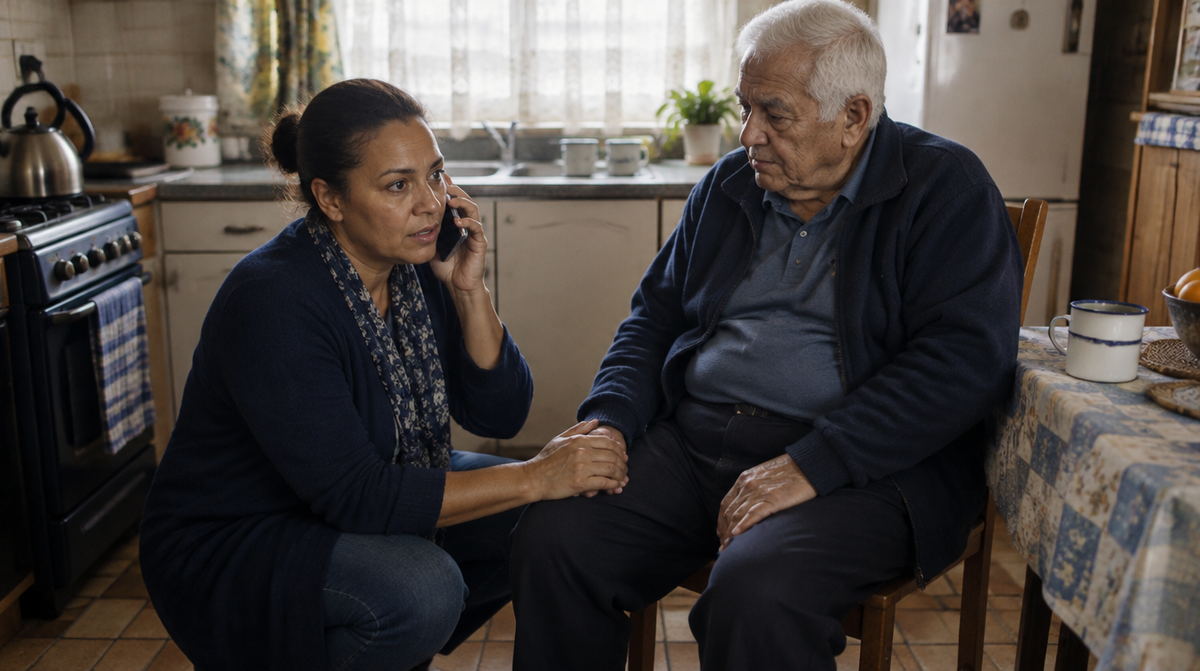
If your mum, dad or partner has already had one stroke, you have probably wondered whether you would recognise a second one in time. Or perhaps you are reading this because something about a loved one just does not seem right. This guide explains the BE FAST warning signs, who to call in South Africa and what to do in the minutes before help arrives.
Key takeaways
- BE FAST stands for Balance, Eyes, Face, Arms, Speech and Time. If you notice even one sign that comes on suddenly, treat it as an emergency.
- In South Africa, call 10177 for an ambulance or 112 from a cellphone, or the emergency number on your medical aid card.
- Write down the time the symptoms started (or when the person was last seen well). Doctors use this to decide on clot-busting treatment, which is usually given within 4.5 hours.
- Do not give food, drink or aspirin while you wait, and do not wait to see if the symptoms pass.
- Symptoms that go away within minutes (a "mini-stroke" or TIA) still need urgent medical assessment, because they can be a warning of a bigger stroke.
What are the signs of a stroke?
The signs of a stroke come on suddenly and usually affect one side of the body: a drooping face, a weak arm, slurred or confused speech, loss of balance or sudden trouble seeing. The easiest way to remember them is BE FAST.
A stroke happens when blood flow to part of the brain is blocked or a blood vessel bursts. Because brain cells start dying within minutes, the signs show up in whatever the affected part of the brain controls. That is why a stroke on one side of the brain often weakens the opposite side of the body.
The Heart and Stroke Foundation South Africa (2023) points out that the person having a stroke is often unaware of it. That makes you, the family member or carer, the person most likely to notice and act.
What does BE FAST stand for?
BE FAST is a simple checklist: Balance, Eyes, Face, Arms, Speech, Time. Check each one quickly. One sudden sign is enough to call for help.
| Letter | What to look for | Quick check |
|---|---|---|
| Balance | Sudden dizziness, loss of balance or trouble walking | Is the person suddenly unsteady, leaning or unable to stand? |
| Eyes | Sudden blurred or double vision, or loss of sight in one or both eyes | Ask: "Can you see properly?" Watch for them bumping into things on one side. |
| Face | One side of the face droops | Ask them to smile or show their teeth. Is one side lower? |
| Arms | Weakness or numbness in one arm (or leg) | Ask them to lift both arms for 10 seconds. Does one drift down? |
| Speech | Slurred words, confused speech or trouble understanding | Ask them to repeat a simple sentence. Are the words clear? |
| Time | Every minute counts | Call for help now and note the time the symptoms started. |
The Heart and Stroke Foundation South Africa teaches the shorter FAST version (Face, Arms, Speech, Time). The extra B and E were added because some strokes, especially those at the back of the brain, mainly cause balance or vision problems. A study published in the journal Stroke (Aroor and colleagues, 2017) found that just over 14% of stroke patients in their group did not have any FAST signs. Adding balance and eye symptoms cut the proportion of missed strokes to 4.4%.
Other sudden warning signs
- A sudden, severe headache that is unlike any headache before
- Sudden confusion, or trouble understanding what you are saying
- Sudden numbness or tingling down one side of the body
Why does every minute matter in a stroke?
Every minute matters because brain cells die quickly when their blood supply is cut off, and the best treatments only work if they are given early. Getting to hospital fast can be the difference between a good recovery and lasting disability.
A well-known estimate by stroke neurologist Jeffrey Saver, published in Stroke (2006), calculated that a typical untreated stroke destroys about 1.9 million brain cells every minute. That is where the phrase "time is brain" comes from.
For the most common type of stroke, caused by a clot, doctors may be able to give a clot-busting medicine (thrombolysis). A South African Medical Journal article (Taylor and colleagues, 2016) describes this as standard care for suitable patients treated within 4.5 hours of symptoms starting, with bigger benefits the earlier it is given. Some patients with a large blocked artery can also have the clot removed (thrombectomy), usually within 6 hours, at specialised stroke centres.
Not every hospital in South Africa offers these treatments, and not every patient is suitable. Your job is simply to get the person to help quickly and tell the team when it all started.
The stakes are real. According to the Heart and Stroke Foundation South Africa (2023), about 10 people have a stroke every hour in South Africa, and about a third of people who have a stroke die, while a quarter are left with a life-changing disability.

What should you do if you think someone is having a stroke in South Africa?
Call for emergency help straight away, note the time, keep the person safe and do not give them anything by mouth. Here is the order to follow.
1. Call for help immediately
- 10177 for a public ambulance from any phone
- 112 from a cellphone (works on MTN, Vodacom, Cell C and Telkom, according to the Western Cape Government)
- The emergency number on your medical aid card, if your loved one has medical aid
Say clearly that you think it is a stroke. Advice shared by Eyewitness News (2025) suggests giving a callback number first in case the call drops, then your name, your exact location, what is happening and any known conditions such as high blood pressure or diabetes. Stay on the line and follow the call-taker's instructions.
2. Write down the time
Note the time the symptoms started. If the person woke up with symptoms or you found them like this, note the last time they were seen well. Put it in your phone or on paper, because in a panic it is easy to forget.
3. Keep them safe and comfortable
- Help them sit or lie down somewhere safe so they cannot fall.
- If they are drowsy or being sick, NewYork-Presbyterian advises keeping them on their side with the head slightly raised.
- Loosen tight clothing and stay with them.
4. Do not give food, drink or aspirin
A stroke can affect swallowing, so food or drink could cause choking. Do not give aspirin either: some strokes are caused by bleeding in the brain, and only a brain scan can tell the difference.
5. Get ready for the hospital
While you wait, gather their ID, medical aid card, a list of their medicines (or the boxes themselves) and a phone charger. If they have had a stroke before, bring any discharge letters.
What if the symptoms go away?
Still get urgent medical help. Stroke symptoms that disappear within minutes or hours may be a transient ischaemic attack (TIA), often called a mini-stroke, and it is a warning sign.
NI Direct, the Northern Ireland government health service, explains that TIA effects often last only a few minutes and fully resolve within 24 hours, but that a TIA is a warning that a full stroke may follow soon. Doctors can often lower that risk with prompt assessment and treatment. Do not cancel the ambulance because your loved one says they feel fine.
Is the risk higher after a first stroke?
Yes. People who have already had a stroke or TIA are at higher risk of another one, so BE FAST is worth knowing for every carer in the household.
Some practical steps for families:
- Stick the emergency numbers on the fridge and save them in everyone's phone, including older children and any home carer.
- Teach the BE FAST checks to whoever spends the most time with your loved one.
- Help them take blood pressure, diabetes and cholesterol medicines exactly as prescribed. The Heart and Stroke Foundation South Africa lists controlling these, not smoking, eating well and staying active as key ways to lower stroke risk.
- Know where your nearest emergency unit is, and whether it is public or private, before you need it.
If your loved one is already in recovery, our guide on what to expect in the first weeks after a stroke explains how to tell normal recovery changes apart from new warning signs.
What happens after the emergency?
Once the person is stable, the focus moves to rehabilitation with physios, OTs and speech therapists. Recovery often continues at home for months.
Daily practice set by the therapy team makes a difference, especially for a weak hand. Our guide on helping a loved one's hand recover at home covers how families can support this. Some families also use a rehab glove, such as Mirra, to help with daily hand repetitions at home, but check with your loved one's therapist first.
When should you call a doctor or therapist?
Call 10177 or 112 immediately for any sudden BE FAST sign, a sudden severe headache, sudden confusion or a seizure, even if it seems to settle.
Contact your loved one's doctor, physio or OT soon (not as an emergency) if you notice:
- Gradually worsening weakness, stiffness or pain over days or weeks
- New problems with swallowing, such as coughing when eating or drinking
- Changes in mood, sleep or memory that worry you
- Side effects from medicines, or trouble taking them as prescribed
Frequently asked questions
What is the emergency number for a stroke in South Africa?
Call 10177 for a public ambulance, or 112 from a cellphone. If your loved one has medical aid, the emergency number on the medical aid card can also dispatch an ambulance. Say clearly that you think it is a stroke.
Should I drive my loved one to hospital myself?
Calling an ambulance is generally safest, because paramedics can start assessing the person and alert the right hospital. If you are told there will be a long delay, ask the call-taker for advice on the fastest safe option. Never let the person drive themselves.
Are stroke signs different in women?
The BE FAST signs apply to women and men alike, and they are the signs to check first. If someone suddenly seems very unwell or confused in a way you cannot explain, err on the side of calling for help and let the emergency team assess them.
Can a stroke happen while someone is sleeping?
Yes. If someone wakes up with stroke signs, call for help straight away and tell the team the last time they were seen well, such as when they went to bed. This helps doctors decide on treatment.
Sources
- Heart and Stroke Foundation South Africa, World Stroke Week 2023 press release, 2023
- Aroor S, Singh R, Goldstein LB, BE-FAST (Balance, Eyes, Face, Arm, Speech, Time): Reducing the proportion of strokes missed using the FAST mnemonic, Stroke, 2017
- Saver JL, Time is brain, quantified, Stroke, 2006
- Taylor A and colleagues, Advances in stroke treatment are within reach, South African Medical Journal, 2016
- NI Direct (Northern Ireland Government), Transient ischaemic attack (TIA), accessed 2026
- Western Cape Government, Know who you can call in an emergency, accessed 2026
- Eyewitness News, In case of emergency: who to call and what to say, 2025
- NewYork-Presbyterian, Know what to do if you see someone having a stroke, accessed 2026

Keep the hand practising every day
Try Mirra at home for 30 days, with free tracked delivery anywhere in South Africa.
Try Mirra at home