
Is It Normal to Be Tired After a Stroke? Post-Stroke Fatigue Explained
In this guide
This guide is general information, not medical advice. Always follow the advice of your loved one's doctor, physio or occupational therapist (OT).
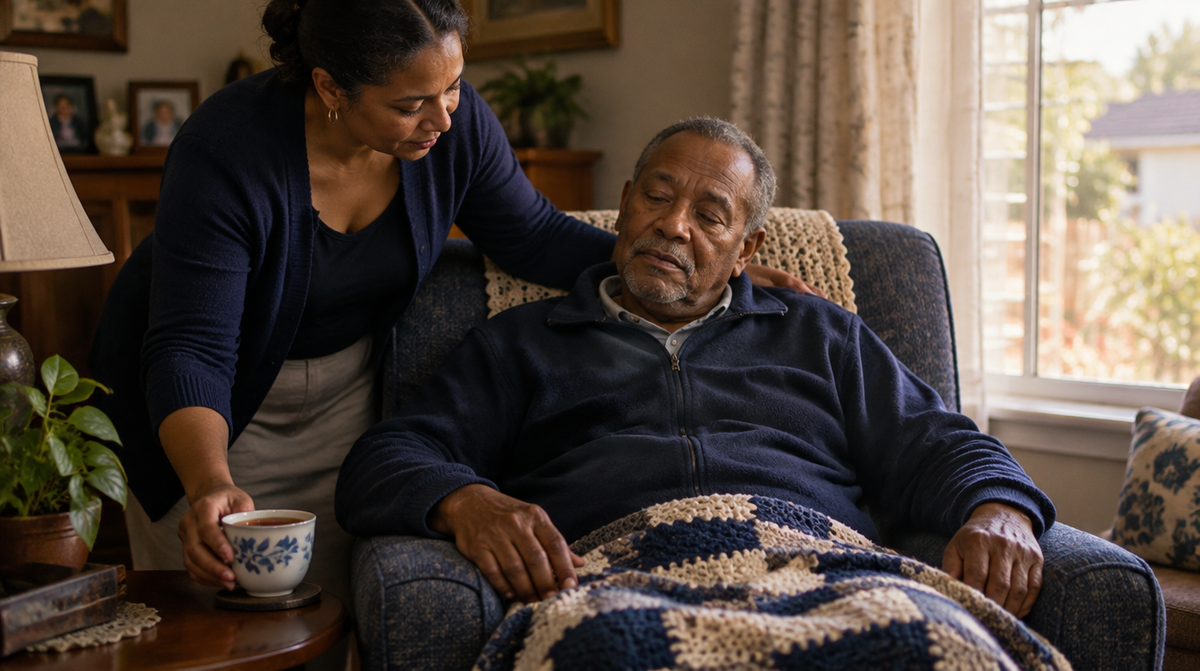
Mum is home after her stroke, and she sleeps for hours, yet still wakes up exhausted. Or Dad manages ten minutes of his exercises and then has to lie down for the rest of the afternoon. If this sounds familiar, you are not imagining it, and your loved one is not being lazy.
Key takeaways
- Yes, it is very common to be tired after a stroke. A 2016 review of 49 studies found that about half of stroke survivors have fatigue.
- Post-stroke fatigue is different from normal tiredness: it often does not get better with rest and is not linked to how busy someone has been.
- Causes include the brain healing, the extra effort of moving a weak side, poor sleep, low mood, pain and some medicines, so it is worth a check-up with the doctor.
- Pacing helps: short rests before exhaustion sets in, doing the most important tasks at a person's best time of day, and building activity up slowly.
- Fatigue often improves over time, but sudden new weakness, confusion or drowsiness is not fatigue and needs emergency help.
Is it normal to be tired after a stroke?
Yes. Tiredness and fatigue are among the most common effects of stroke, and they can follow any type of stroke, including a TIA (mini-stroke), according to the Stroke Association (UK).
A systematic review of 49 studies by Cumming and colleagues (International Journal of Stroke, 2016) estimated that around 50% of stroke survivors have fatigue. A Royal Berkshire NHS Foundation Trust leaflet (2023) says about one in four stroke survivors are affected severely and about one in three moderately.
Many survivors describe fatigue as one of the hardest parts of recovery, even when their walking or hand use is improving. So if your loved one is struggling with energy, they are far from alone.
How is post-stroke fatigue different from normal tiredness?
Post-stroke fatigue is an overwhelming lack of physical and mental energy that does not reliably improve with rest. Normal tiredness usually follows a busy day and goes away after a good night's sleep. Fatigue after a stroke often does not.
NHS stroke teams describe these differences:
- It is not linked to how busy someone has been, so it can hit even on a quiet day.
- Sleep or a nap may not "recharge" the person.
- It can make other stroke effects worse for a while, such as weakness on one side, forgetfulness, poor concentration or slurred speech.
- It affects thinking as well as the body. Some people call it "brain fog".
Signs to watch for at home include yawning, heavy eyes, losing concentration, a "fuzzy" head, becoming irritable or fidgety, and limbs that feel heavy (Royal Berkshire NHS Foundation Trust, 2023).
Why are stroke survivors so tired?
There is usually no single cause. Fatigue tends to come from a mix of the stroke itself and everything that changes afterwards.
The Stroke Association lists these common contributors:
- Healing. The brain and body use a lot of energy to recover, especially in the first weeks and months.
- Extra effort. Walking, dressing or eating with a weak arm or leg takes far more energy than before. Rehab sessions are tiring too.
- Lower fitness. Time in hospital and less activity mean muscles and stamina have dropped.
- Poor sleep. Insomnia and sleep apnoea (breathing that stops and starts during sleep, often with loud snoring or gasping) cause daytime tiredness.
- Mood. Depression and anxiety are common after stroke and can overlap with fatigue.
- Other health issues. Pain, swallowing problems that affect eating, anaemia, diabetes, an underactive thyroid, and side effects of some medicines.
Because several of these can be treated, it is worth asking the GP or stroke team to look for causes rather than assuming it is "just the stroke".

How can you help someone manage fatigue at home?
The most useful approach is pacing: spreading energy across the day instead of using it all up at once. Occupational therapists teach this as energy conservation, and you can start today.
1. Rest before exhaustion, not after
Plan short rests often, taken before your loved one feels wiped out, rather than one long collapse in the afternoon. Even 10 to 15 minutes sitting quietly with eyes closed can help.
2. Keep a simple energy diary for a week
Each day, jot down what they did and how tired they felt, from 1 (fine) to 5 (exhausted). After a week, patterns usually appear. Many people have a "best" time of day, often the morning. Take the diary to the next doctor or therapy appointment.
3. Prioritise and share the load
Sort tasks into: must do, want to do, someone else can do, and can skip. Let the person spend energy on what matters to them, such as a phone call with the grandchildren, and hand over tasks like ironing to someone else.
4. Plan the day and break tasks up
Mix heavy and light jobs. Do home exercises at their best time of day, not straight after a bath or a visit. Split big tasks into stages, for example showering in the morning and dressing after a rest.
5. Make tasks easier
Keep everyday items between hip and shoulder height so there is less bending and reaching. A chair in the bathroom or kitchen lets them sit for tasks instead of standing.
6. Help the brain too
Use checklists, phone alarms and sticky notes. Do one thing at a time, and switch off the TV during conversations or exercises so there is less to process.
7. Build activity up slowly
It sounds backwards, but gentle, gradual activity usually helps energy over time, because fitness and strength improve. Follow the programme your physio or OT gave you, and increase only in small steps. If you are no longer seeing a therapist, our guide on what to do when physio ends after a stroke has practical next steps.
8. Look after the basics
Regular meals, enough water, a steady bedtime routine, and limiting alcohol all make a difference. Ask the doctor before stopping or changing any medicine, even if you think it is causing tiredness.
Does fatigue affect stroke rehab and hand recovery?
Yes, it can. The Stroke Association notes that fatigue can limit everyday activities, slow rehabilitation and make returning to work or social life more difficult.
The practical answer is short, frequent practice rather than long sessions. Two or three five-minute bursts of hand exercises spread across the day are often easier to manage than one 30-minute session. Some families also use a rehab glove, such as Mirra, to help with gentle daily repetitions on low-energy days, but check with your therapist first. For a realistic picture of timeframes, see how long hand recovery takes after a stroke.
Is there treatment for post-stroke fatigue?
There is no single proven cure yet. A Cochrane review (Wu and colleagues, 2015) found that the evidence for both medicines and non-drug treatments aimed at post-stroke fatigue was of very low quality, so there was not enough evidence to recommend any one treatment.
That does not mean nothing helps. Doctors can treat contributing problems such as sleep apnoea, low mood, pain, anaemia or a medicine side effect. Ask the GP or neurologist directly, and ask whether an OT can teach fatigue management. In the public sector, the stroke unit or your local clinic can refer you; on medical aid, check whether your plan covers OT sessions after discharge.
The encouraging part: the Stroke Association notes that fatigue often improves over time.
How can family members cope?
Fatigue is invisible, which makes it hard for family to understand. Someone may look well at Sunday lunch and then need two days to recover.
- Agree on a signal, such as a hand gesture, that means "I need to rest now", so they do not have to explain.
- Keep visits short and spread them out.
- Share what you learn from the energy diary with siblings and other carers, so everyone paces the same way.
- Protect your own energy too. Caring is tiring, and you cannot pour from an empty cup.
When should you call a doctor or therapist?
Call an ambulance immediately (10177 from a landline, or 112 from a cellphone) if you notice signs of a new stroke: sudden loss of balance, sudden vision changes, a drooping face, arm or leg weakness, slurred speech, or sudden severe confusion or drowsiness. Heart and Stroke Foundation South Africa (2023) estimates that 10 people have a stroke every hour in South Africa, and someone who has had one stroke is at risk of another.
Book an appointment with the GP or stroke team if:
- Tiredness is getting worse instead of slowly better.
- They snore loudly, gasp or stop breathing during sleep.
- They seem low, tearful, anxious or have lost interest in things they enjoyed.
- Tiredness started or worsened after a new medicine.
- They are not eating or drinking enough, or have trouble swallowing.
- Fatigue is stopping them from doing their rehab programme.
Frequently asked questions
How long does fatigue last after a stroke?
It varies a lot from person to person. For many people fatigue eases over the months after the stroke, but for some it lasts longer. Keeping an energy diary helps you and the doctor see whether it is improving.
Is it normal to sleep a lot after a stroke?
Sleeping more is common, especially in the early weeks while the brain heals. But sleep does not always fix post-stroke fatigue. If your loved one is suddenly much harder to wake, or drowsiness comes on suddenly, get urgent medical help.
Should someone with fatigue still do their exercises?
Usually yes, but in smaller, more frequent doses and at their best time of day. Gentle, gradual activity tends to build energy over time. Ask the physio or OT to adjust the programme if fatigue is making it too hard.
Can post-stroke fatigue be a sign of depression?
It can overlap with depression, and the two often occur together. They are different conditions, though, and both are worth discussing with the doctor, because low mood can be treated.
Sources
- Cumming TB, Packer M, Kramer SF, English C. The prevalence of fatigue after stroke: a systematic review and meta-analysis. International Journal of Stroke, 2016.
- Wu S, Kutlubaev MA, Chun HY, et al. Interventions for post-stroke fatigue. Cochrane Database of Systematic Reviews, 2015.
- Stroke Association (UK). Tiredness and fatigue after stroke. Accessed 2026.
- Royal Berkshire NHS Foundation Trust. Fatigue after stroke (patient leaflet), 2023.
- Heart and Stroke Foundation South Africa. World Stroke Week 2023 press release, 2023.
Keep the hand practising every day
Try Mirra at home for 30 days, with free tracked delivery anywhere in South Africa.
Try Mirra at home